[Taskbar Hero / TBH Play Log] One full day idling, and what the early game taught me — a growth-system guide to the taskbar idle RPG
What I learned about Taskbar Hero / TBH's early game after idling it for a full day. Hero lineup, rune priorities, and how to switch skill builds between farming and act bosses — a hands-on look at how to grow.
This article may contain affiliate links.
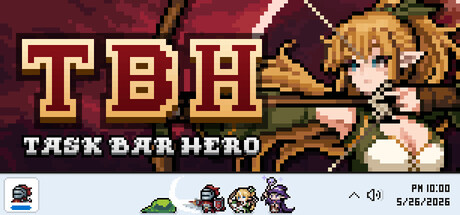
I idled a taskbar game for a full day
I played Taskbar Hero, a.k.a. TBH, idling it for about a full day.
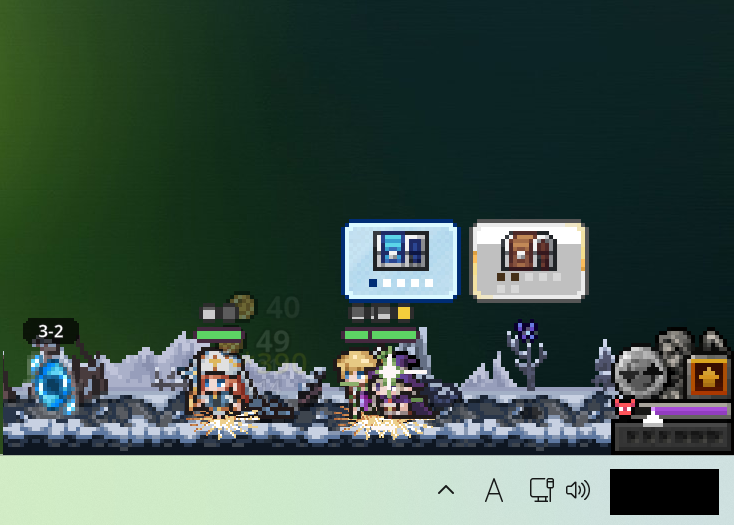
It's an unusual idle RPG where characters appear to fight right on top of your taskbar. I'll be honest — I started purely because of how it looks. Just the idea of "tiny characters scrapping away in the corner of the screen" was enough to reel me in.
But once I actually dug in, behind the novelty was a proper set of progression systems: equipment, runes, hero lineups, skill builds, boss challenges — everything an idle game needs. That said, it's not the kind of game you blast through quickly. It's a slow-burn title where you spend time gathering XP, gold, and gear, and inch your way to the next stage.
After a full day of idling, my save had reached roughly the 2-9 farming point. This article gathers the early-game progression ideas and farming tips I picked up along the way. It's less a declaration of "the correct strategy" and more a set of notes on how things feel to me right now.
💴 Prices shown in Japanese Yen (JPY). → Japanese article
What's in this log
This article pulls together the early-game approach and progression thinking I arrived at after idling TBH for about a day. It's not a fine-grained controls guide — it's mostly about where to put your attention when you're in it for the long haul.
Here's the rough flow:
- What kind of game it is: the basics of a taskbar idle RPG, and the three growth pillars (level, runes, equipment)
- How far I got: 2-9 farming after a full day, and why this feels like a long-haul game
- Lineup and farming: my current Priest-front lineup, and why farming a stage or two below the frontline works
- Switching skills: area skills for normal farming, single-target for act bosses
- Rune priorities: hero slots first, then a farm-speed-focused build
- Equipment and other systems: cube fusion, offline rewards, and the trade/pet features I haven't mastered yet
- Wrap-up: how to live with an idle game, plus early-game takeaways
If you're stuck in the early game too, I hope this helps point a direction. Let's go through it in order.
What kind of game is Taskbar Hero?
TBH is an idle RPG that runs inside a transparent window, so it looks like the game is playing out right on top of your taskbar.
What you actually do is set up your characters, skills, equipment, and runes. After that, you mostly just watch the fights. Defeating enemies gets you XP, gold, and gear, and you gradually push through the stages.
It's not a game you beat with mechanical skill — it's closer to a game about figuring out how to build progression efficiency. Leaving it running while you work, and popping back occasionally to advance your growth, is the sweet spot. I kept mine fighting away in the corner the whole time I was writing this blog.
Three growth pillars: level, runes, equipment
Growth in TBH breaks down into three main parts.
The first is level. Beating enemies earns XP, and your characters level up. Leveling lets you strengthen skills and passives.
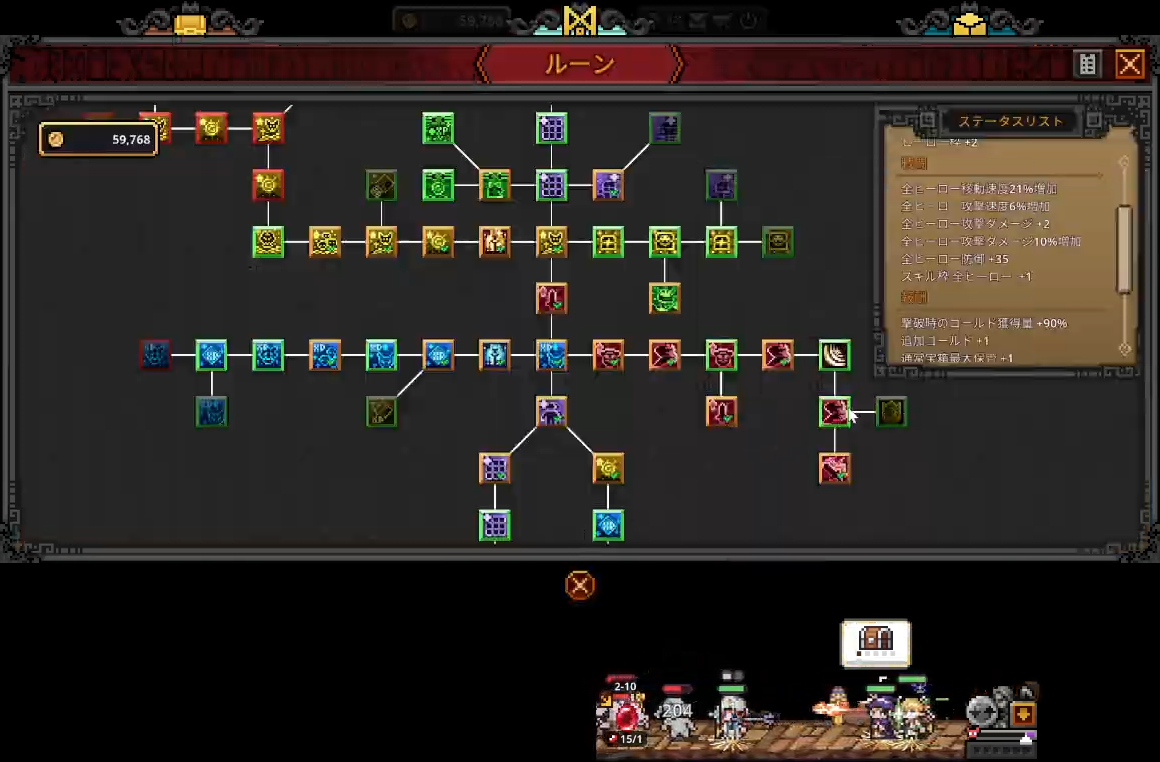
The second is runes. Using gold, you raise your whole roster's stats — attack, gold gain, XP gain, move speed, inventory, and more.
The third is equipment. Gear from treasure chests powers up your characters. This is surprisingly not to be underestimated — the stat boosts from equipment are pretty large. In my experience, a single piece of gear sometimes outweighed one or two levels' worth of difference.
Growing all three a little at a time is the basic rhythm of TBH.
A full day of idling got me to 2-9 farming
On my first session, I was farming around 1-8.
After idling for roughly a full day, I'd progressed to farming about 2-9. That said, it wasn't a sudden jump. Idle, come back, raise runes, sort gear, idle again — repeating that loop is how the frontline slowly creeps upward.
The level cap seems to be around 70 (this is just my read from how far I've played), so it looks like a game you'll be with for a good while. My gut feeling is that it's the type you play across several days to two weeks to reach a milestone.
My current lineup: Priest, Ranger, Sorcerer
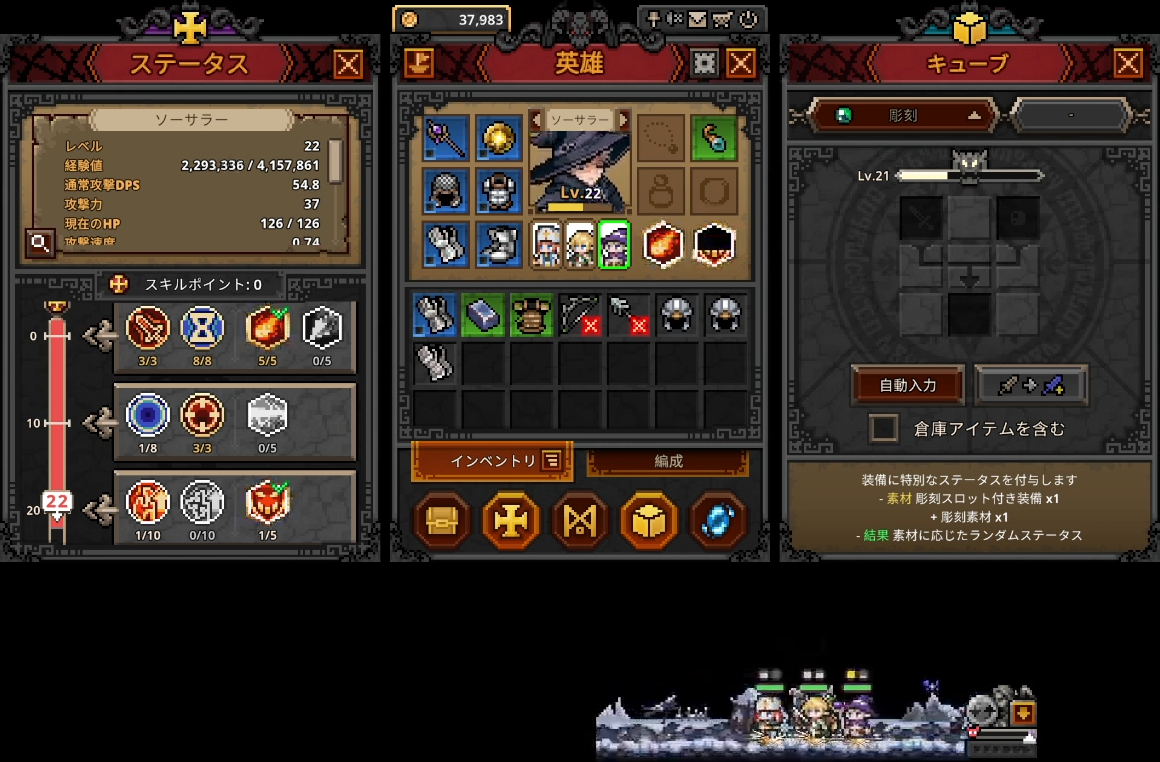
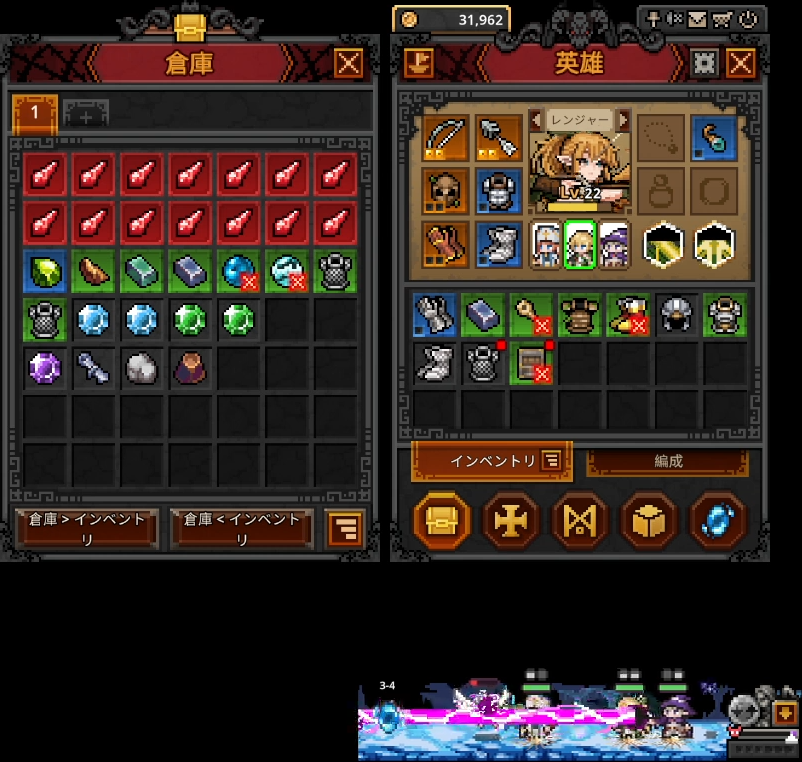
My current lineup is three heroes: Priest, Ranger, and Sorcerer.
At first I wanted a Warrior up front as the tank. But when I recruited the Priest, it slotted in as a frontliner — to my surprise. "Wait, the healer goes up front?" TBH's Priest isn't a backline healer; it seems to be the type that steps forward and brawls.
Since you can build it toward durability, you can run it like a battle-priest or tank-priest. So this time I dropped the Warrior and use the Priest as a frontline-plus-support role.
Here's roughly how I'm running each role right now.
| Hero | Role |
|---|---|
| Priest | Frontline / durability / healing / party-wide buff |
| Ranger | Damage through fast basic-attack volume |
| Sorcerer | Area skills for clearing trash mobs |
What feels especially effective is the Priest's always-on passive. It raises the whole party's attack, and that alone makes it well worth fielding.
Incidentally, running two frontliners means both can take hits, so you tend to need area healing. So this time I keep the Priest as a solo frontliner and support it with single-target healing. Being able to focus the healing on one spot actually made management easier.
Farm a stage or two below the frontline, fast
What became clear after a day of play is that farming a stage or two below your barely-winnable frontline seems more efficient than clinging to the edge.
On frontline stages, fights drag out, or you sometimes lose. That quietly eats time. On a stage one or two below, you can farm quickly and reliably.
And honestly, bumping up one stage didn't seem to dramatically increase XP or gold. So rather than forcing yourself to hold the frontline, going for stable, fast farming seems better for overall efficiency — that's where I landed.
Between a single-target-leaning build and an area-leaning build, I sometimes saw a 20–40 second difference per loop. In an idle game, that "per-loop difference" piles up all day long, so farming speed matters a lot. It's the very definition of small gains adding up.
Area skills win for farming
For farming, area skills are clearly stronger than single-target ones.
Trash mobs come out in groups, so being able to sweep them up raises your farming speed. This is where the Sorcerer's area skills shine. Rage, Thunder, and Blizzard-type skills hit in a line or area and handle trash well, in my experience.
Fireball isn't bad, but it feels like it only really connects in front. When enemies tend to linger on the back line, area skills that also reach behind, like Thunder or Blizzard, were more effective.
On the flip side, placement-type skills like Hydra had moments where they were a bit inefficient for farming. If you place a Hydra near the end of a wave, it doesn't carry over to the next wave and you're just left with the cooldown. For farming, skills that deal damage to enemies the instant they activate are easier to work with — that's my current take.
Act bosses need a different build from farming
Normal stages are divided every 10, and stages like 1-10 and 2-10 have an "act boss."
Challenging an act boss requires a dedicated item that looks like a red gem. It's probably a boss fight with a limited number of attempts (again, this is my understanding from my own play).
The key here is to switch your skill build between farming and bosses. Area attacks are strong for farming, but an act boss is basically a single tough enemy. So when challenging a boss, a single-target-leaning build seems better.
In fact, when I challenged a mission act boss with my area-leaning setup, I lost almost instantly. Seriously, it was startling how fast I went down. Bosses also throw area attacks at your back line, so rather than enduring over time, it seems safer to burst them down quickly with firepower.
Rather than grinding it out with the Priest's party-wide heal, supporting the frontline with single-target heals while pumping the Ranger's and Sorcerer's single-target damage seemed better suited to bosses. Area skills for fast farming normally, single-target firepower for act bosses — that switch matters quite a bit in TBH.
Rune strategy: hero slots come first
Runes are a system that uses gold to strengthen your whole roster. There's a lot you can raise — attack, gold gain, XP gain, move speed, inventory, and more.
At first I thought I'd specialize into one specific stat, but once I tried it, raising broadly from the cheap ones seemed better. Even for the same rune effect, the gold cost jumps sharply for the 2nd and 3rd copies. Rather than hoarding for an expensive rune, filling in cheap runes in order seems better for early growth efficiency.
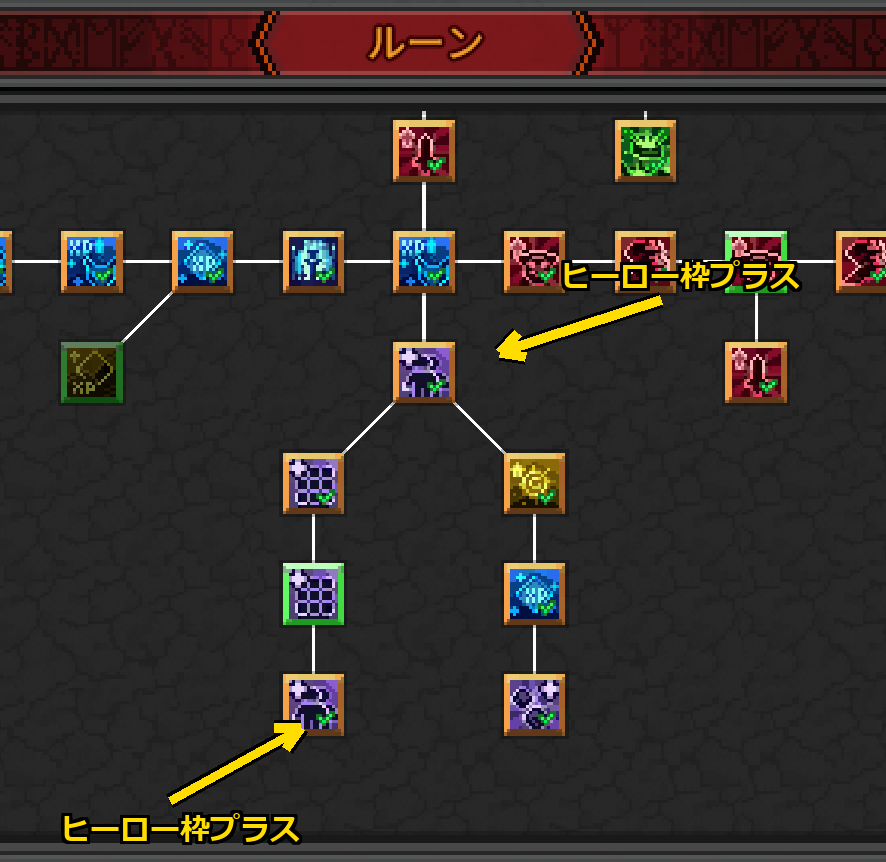
That said, what you most want to prioritize is unlocking hero slots.
More hero slots means more characters joining the fight. Going from one to two, or two to three, hugely increases your firepower and your number of skills. It effectively multiplies your damage, so unlocking hero slots is genuinely important. You won't regret keeping this top of mind.
Hero slots seem to be unlocked by progressing down from the first rune, "Stage Boss XP," and then opening the inventory-type runes at the lower left. However, the gold cost is steep — around 100,000–150,000, which is a heavy sum early on. So rather than forcing it through hoarding, it seemed better to raise attack, gold, and XP first, and go for it once you can realistically bank 100,000 gold.
How I think about rune priority
Here's roughly how I weigh rune priority right now.
| Priority | Rune |
|---|---|
| Top | Hero slots |
| 2 | Attack & move speed (farm-speed up) |
| 3 | Gold gain |
| 4 | XP |
| 5 | Utility like inventory and offline rewards |
A bit of extra detail. The base idea is a style that prioritizes farm-speed first.
I put attack and move speed on the same tier, because both feed directly into farming speed. Higher attack means killing enemies faster and shorter loops; faster movement cuts the losses between waves and when closing on enemies. I think of these two together as "farm-speed up" and raise them as a priority. Once farming gets faster, XP and gold end up accumulating efficiently as a result.
Gold gain is important for advancing your rune upgrades overall. At the end of the day, you can't touch runes without gold. It's the thing I want to keep in mind right after farming speed.
XP up matters too, but without gold you can't upgrade runes in the first place, so I place gold a bit higher in my own ranking.
Defense I'm keeping at lower priority for now. You need it to break through higher stages, but it doesn't directly contribute to stable farming speed. That said, if you get stuck on act bosses or high-difficulty stages, the importance of defense and healing will probably rise. This part may change depending on how progression goes.
Don't forget equipment and cube fusion
After all that rune talk — the stat boosts from equipment are large too.
To repeat myself: rather than going up one or two levels, picking up a strong piece of gear can boost your power all at once. So gear drops and cube fusion are quietly important.
With the cube, you can fuse 9 pieces of the same grade to make a higher-grade piece. You can use unwanted gear as material, so after a long idle session, you'll want to sort and fuse as a set. A full inventory can stop you from picking up new gear, so regular cleanup matters.
For equipment grades, I've confirmed Common → Uncommon → Rare → Legendary, and what looks like an even higher Immortal tier. You can sometimes pick up Legendary gear even early on, and when you do, your stats jump. Gear luck seems to affect your pace, so opening chests frequently looks like the way to go.
About offline rewards
TBH also appears to have offline rewards.
But I haven't properly tried offline idling yet, so I can't confirm the actual efficiency. There are runes that boost offline rewards, but I haven't prioritized them so far.
The reason is simple: idling online seems more efficient overall. Since I keep it running actively while idling, offline rewards haven't had their moment yet. If the efficiency of offline rewards becomes clearer down the line, my view here may change.
A feature I haven't mastered: Trade
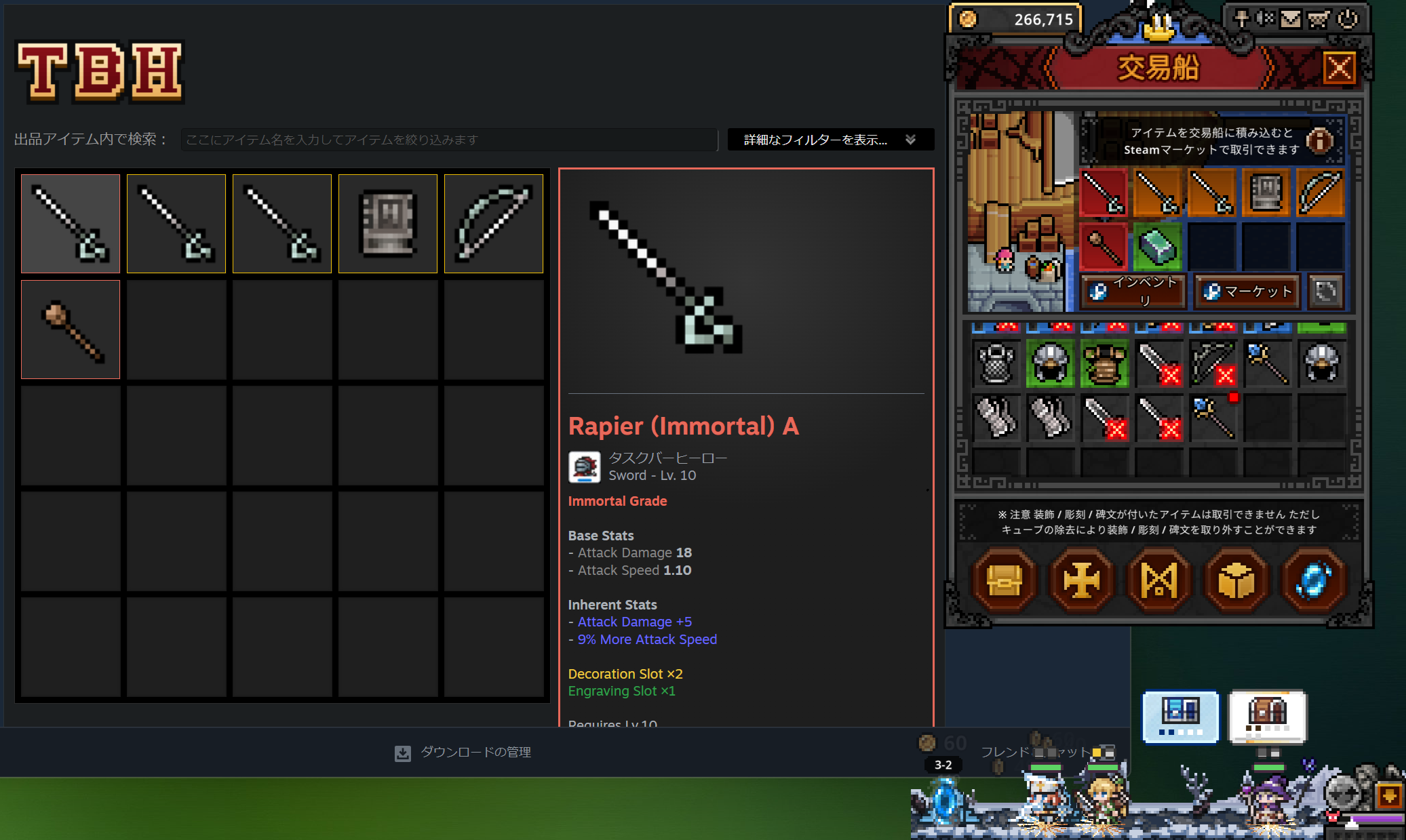
TBH has a trade feature that lets you upload items to the Steam Market and trade them.
From the in-game trade ship, you can apparently list unwanted gear and the like on the Steam Market. In theory, you'd sell off surplus gear for a little pocket money — except in my case, not a single item has ever sold. So honestly, I don't really understand how it works yet. What the going rates are, what kind of items actually sell — I'd like to properly test all of this later.
A feature I haven't mastered: Pets
Another thing I'm not fully using yet is the pet feature.
Pets are a kind of permanent buff, and they seem to be the type that takes effect even without equipping them. They probably stack additively with rune buffs, though that's my guess. As an always-on boost, they look like they'll quietly matter alongside runes.
There are also paid pets, and if you want to keep spending to a minimum, the Supporter Pack — which comes with three pets (XP, gold, and treasure-chest drop rate) — is a good pick. Those three tie directly into farming efficiency, so they felt like a good fit for an idle game. Even the full pack stays under ¥2,000, so for this much content at that price, it's affordable as far as spending goes. That said, this is a game you can grow patiently without paying, so feel free to judge it by taste.
How to live with it as an idle game
As I've written throughout, TBH isn't a game you blitz through in a short time.
Both XP and gold are pretty stingy from the early game. Leveling is slow too. Honestly, at the start, even an hour of idling doesn't move things much. Some people will think, "huh, that's slower than I expected."
But as your runes, gear, and hero slots come together, your growth speed gradually picks up. Leaving it running while you work, popping back to sort gear and upgrade runes, then idling again — that rhythm felt like the best way to play.
As a blog, too, rather than writing an exhaustive guide every time, it seems to suit a format of checking progress and summarizing newly understood mechanics and growth ideas. This article is a first step in that direction.
Wrap-up: TBH is a taskbar idle RPG you grow patiently
After about a day of playing, TBH struck me as a fairly patient kind of idle RPG.
The look — characters appearing to fight on top of your taskbar — is unique, but underneath it's a solid idle progression game. XP, gold, gear, runes, hero lineups, skill builds — the growth systems are all there.
Finally, let me sum up the early-game points.
- First, aim to unlock hero slots
- For farming, prioritize area skills
- For act bosses, switch to single-target firepower
- Farm a stage or two below the frontline, fast
- Don't force expensive runes — take cheap ones broadly
- Prioritizing farm-speed up (attack & move speed) and gold gain makes progress smoother
- Don't forget gear fusion
Since it's an idle game, it's less about "beating" it and more about thinking "how do I grow" and "how do I raise efficiency." It's not a sprint — it suits people who enjoy slowly building up over days to weeks.
After a full day of idling I was at 2-9 farming, but I've kept chipping away since, and I'm now at 3-5. I cleared Chapter 2 safely, so next I'll be keeping a relaxed eye on how far I can push into Chapter 3.
Related articles
More from this category
[Tales Of Wakana Play Log #1] Clearing the Demo's Underground Stage — Slime Boss Fight and Surprisingly Solid Pixel-Art Action
June 17, 2026
[Taskbar Hero / TBH Play Log #8] Torment Complete Clear — Ranger Burst Build and OP Optimization to Defeat the Final Boss
June 14, 2026
[Lost Castle 2 Play Log] First Solo Clear — Ice Build & Shields Took Down the Demon Lord
June 12, 2026